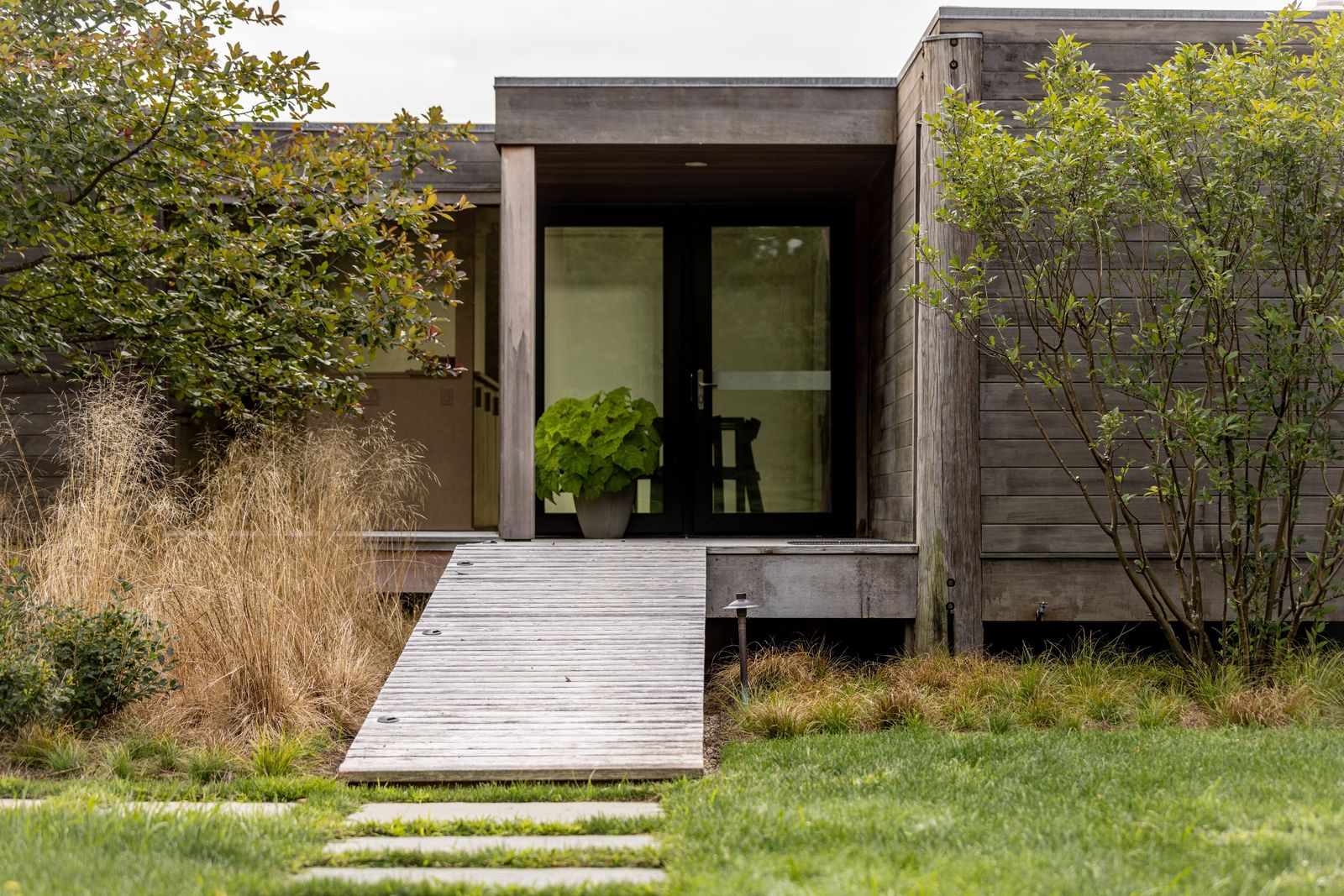
Drive out along Montauk Highway in late August and you can usually tell which properties were planted by someone who read the site first. The gardens that still look composed in the heat, the ones that have not gone crispy at the edges or thrown in the towel by Labor Day, tend to lean on plants that were already living here long before anyone thought to build a house on a dune.
Native plants on Long Island have an image problem. Say the words at a dinner party and half the table pictures a meadow gone feral, the kind of yard that generates a letter from the neighbors. That reputation is decades out of date. Used well, native plantings give you a landscape that handles salt, sand, wind and deer without constant intervention, and still reads as deliberate.
Here is what actually works on the East End, and why.
"Native" is a slipperier word than it sounds. A plant native to upstate New York may struggle badly in Sagaponack, and a plant sold as native at a big-box nursery may be a cultivar bred so far from the original that pollinators no longer recognize it.
The useful definition is narrower: plants that occurred naturally in the coastal plain of Long Island before European settlement. That means species adapted to fast-draining glacial outwash soil, salt-laden air, and a growing season moderated by the Atlantic on three sides. It is a specific set of conditions, and it rules out plenty of things that will happily grow forty miles west in Nassau County.
This distinction matters more than most planting decisions you will make. Get it right and the landscape largely runs itself. Get it wrong and you spend a decade amending soil that was never going to cooperate.
Three site conditions drive almost every plant choice out here.
The soil drains too well. Long Island sits on sand and gravel left behind by a retreating glacier. Water moves through it fast, taking nutrients along for the ride. Plants that evolved in rich woodland loam sulk here. Plants that evolved on a dune are perfectly content.
Salt arrives on the wind, not just the water. A property does not need to front the ocean to get salt exposure. Onshore wind carries spray well inland, and winter road salt does its own damage along the edges. Salt burn shows up as browning on the windward side of a shrub, and by the time it is obvious the damage is done.
The wind never really stops. Exposure is the quiet killer on South Fork properties. Constant wind strips moisture from foliage faster than roots can replace it, which is why a plant that thrives in a sheltered courtyard can fail twenty feet away on an open lawn.
Add relentless deer pressure and increasingly common water restrictions, and the case for natives stops being philosophical. It becomes practical.
Deer resistance is a spectrum, not a guarantee. A hungry herd in a hard February will eat things every chart says they will not touch. That said, browsing patterns on Long Island are consistent enough to plan around.
Deer generally avoid aromatic foliage, fuzzy or leathery leaves, and ornamental grasses. Bayberry, inkberry, red cedar, butterfly weed, little bluestem, switchgrass and native ferns all tend to survive.
Deer reliably destroy hostas, daylilies, yews and arborvitae. Planting those on an unfenced East End property is an expensive way to run a deer buffet.
The practical approach layers the two: browse-resistant plants at the property edges where deer enter, and anything more tempting held closer to the house where traffic is lighter. There is more detail on deer-resistant natives here, and for heavy-pressure properties a managed deer control program does the rest.
This is where most native plantings go wrong, and it has nothing to do with the plants.
A meadow that looks accidental and a meadow that looks composed can contain identical species. The difference is structure. Three principles do most of the work:
Plant in drifts, not singles. Five of one grass reads as a design decision. One of five different perennials reads as a garden center impulse buy. Repetition is what separates the two.
Give it a frame. A mown edge, a low stone wall, a clipped hedge along one side. A defined border tells the eye that the loose planting inside it is deliberate. This single move resolves most "it looks messy" objections before they are raised.
Keep an evergreen backbone. Natives that die back leave a real gap from November to April. Red cedar, inkberry and holly hold the structure while the perennials are off duty, which is what keeps a native landscape from looking abandoned in the off-season.
Timing matters more with natives than with nursery-pampered ornamentals, because the whole point is getting them established well enough to fend for themselves.
Fall, from mid-September through late October, is the best window for woody plants. Soil is still warm, air is cooling, and roots establish without the plant trying to support a full canopy at the same time. Trees and shrubs planted now go into spring already anchored.
Spring, from April into mid-May, suits perennials and grasses. They want a full season of warmth to root in before facing a winter.
Midsummer is possible but expensive. A July install needs irrigation and monitoring, and the failure rate climbs. If the choice is planting in July or waiting until September, September usually wins.
One caveat worth knowing: the South Fork runs slightly warmer than the rest of Long Island thanks to the ocean on three sides, which stretches the fall window by a week or two compared with points west. It is a small edge, and in a wet October it matters.
Native plantings are not a compromise or a sacrifice of polish. Done properly they are the more sophisticated choice: a landscape that suits its site, needs less water, survives the deer, and looks composed in February as well as July.
The catch is that "done properly" carries real weight. Species selection has to match the exposure, the soil and the deer pressure on your specific property, and the design has to give the planting enough structure to read as intentional.
If your property could use a planting plan built around what actually thrives here, start with a consultation. A walk-through is usually enough to see what the site is asking for. You can also read more about native planting design and the full Hamptons native plant guide.
