Best Plants for Sandy Soil: What Thrives in Hamptons Gardens
Anyone who has planted a garden near the East End knows how quickly water can disappear after a hot summer day. You can irrigate in the morning, check the bed later, and find the upper few inches of soil dry again. That is sandy soil doing exactly what it does best: draining water quickly.
Across Suffolk County and the Hamptons, sandy and sandy-loam soils are part of gardening life. Much of this soil was formed through glacial deposits, and Cornell describes the area's characteristic sandy soils as well-drained, moderately water-holding, and modest in fertility. Add summer heat, coastal winds, and salt exposure near the water, and plants can face very different conditions from those growing farther inland.
The good news is that sandy soil does not have to be "fixed" before you can create a beautiful garden. Plant selection matters far more. At Oceanview Landscapes, we account for soil drainage, sun, wind, salt exposure, and the individual character of a Hamptons property when selecting plants. Choosing species suited to the site can reduce irrigation demands and help plantings settle in with fewer problems.
Below, we share some of the best plants for sandy soil, along with practical advice for helping them establish and perform well.
What Makes Sandy Soil Different?
Pick up a handful of sandy soil and it will usually feel gritty and fall apart easily. Its relatively large particles create plenty of pore space, allowing water and air to move through rapidly.
That drainage has advantages. Roots are less likely to sit in water, and plants susceptible to root problems often appreciate the aeration.
The trade-off is moisture and nutrient retention.
Water moves through sandy ground faster than it does through soils with more clay and organic matter. Nutrients can move with it. This matters on Long Island, where rapid movement through sandy soils can carry nutrients into groundwater. Cornell recommends soil testing and careful nutrient management rather than simply applying more fertilizer.
A good sandy-soil garden starts with plants adapted to these conditions.
1. Bearberry (Arctostaphylos uva-ursi)
For low-growing coverage in dry, sandy areas, bearberry deserves serious consideration.
This native evergreen groundcover forms a spreading mat and works particularly well where maintaining turf or thirstier groundcovers becomes difficult. Its small leaves provide year-round interest, with red berries adding color later in the season.
Cornell notes that bearberry performs well in sandy, infertile soils and can tolerate salt spray, making it particularly relevant for exposed coastal properties. It prefers acidic conditions and can grow in full sun or partial shade.
Best for: Groundcover, sandy slopes, exposed beds, naturalistic planting areas
Light: Full sun to partial shade
Moisture: Dry to moderately dry once established
One caution: bearberry dislikes rich, wet ground. Improving its planting area too aggressively can defeat the purpose of choosing a plant adapted to lean soil.
2. Little Bluestem (Schizachyrium scoparium)
Little bluestem is one of those plants that becomes more interesting as the year progresses.
During summer, its upright foliage adds fine texture without looking heavy. As temperatures cool, the foliage develops copper, bronze, and reddish tones. Seed heads extend its visual value into fall and winter.
It is also remarkably comfortable in lean ground. Cornell resources identify little bluestem as suitable for sandy soil and full sun, with good tolerance for dry conditions.
Best for: Sunny borders, meadow-style gardens, mass plantings
Light: Full sun
Moisture: Dry to average
Rather than planting one isolated grass, we often prefer grasses in repeated groups. The movement created by several plants is especially effective in breezy coastal gardens.
3. Switchgrass (Panicum virgatum)
Where more height and structure are needed, switchgrass is a strong candidate.
This native ornamental grass creates an upright form that works beautifully behind lower perennials. Depending on the cultivar, foliage can offer blue-green, red, or burgundy tones, followed by airy flower panicles.
.jpg)
Switchgrass tolerates poor soil and drought once established. Cornell also recommends it as an alternative to invasive Chinese silver grass.
Best for: Screening, borders, rain garden edges, larger planting groups
Light: Full sun
Moisture: Average to dry, depending on cultivar and site
Leave the stems standing through winter if the setting allows. They provide structure when perennial beds would otherwise look bare.
4. Butterfly Weed (Asclepias tuberosa)
Few perennials make dry soil look as intentional as butterfly weed.
Its bright orange flowers bring strong summer color, and the plant is well adapted to sunny, well-drained sites. It is also a host plant for monarch butterfly caterpillars, adding ecological value to the garden.
Cornell notes that butterfly weed tolerates dry soil and dislikes wet conditions.
Best for: Pollinator gardens, perennial borders, naturalistic beds
Light: Full sun
Moisture: Dry to average
Butterfly weed develops a substantial root system and does not appreciate frequent transplanting. Choose its position carefully and give it time to settle.
5. Purple Lovegrass (Eragrostis spectabilis)
Purple lovegrass can look fairly understated early in the growing season. Then late summer arrives.
Its fine flower heads create a soft purple haze above the foliage, giving mass plantings a light, almost smoky appearance. The plant naturally favors dry or sandy conditions.
It works particularly well where a garden needs softness rather than another large shrub or rigid structural plant.
Best for: Dry borders, meadow plantings, informal coastal gardens
Light: Full sun
Moisture: Dry
6. Wild Bergamot (Monarda fistulosa)
Sandy gardens do not have to rely entirely on grasses and groundcovers.
Wild bergamot adds summer flowers, fragrance, and pollinator activity. Cornell resources identify it as a plant that likes sandy or dry conditions. Its flower heads bring a looser, natural quality that pairs well with ornamental grasses.
Best for: Pollinator beds, sunny borders, meadow gardens
Light: Full sun
Moisture: Dry to average
Give it enough space for air circulation and natural spreading rather than squeezing it between larger plants.
7. Blazing Star (Liatris spp.)
Blazing star brings something particularly useful to perennial planting: vertical flowers.
Its upright flower spikes contrast nicely with rounded shrubs, mounding perennials, and fine-textured grasses. Several Liatris species prefer sandy, freely draining ground and sunny conditions.
Best for: Perennial borders, pollinator gardens, mixed grass plantings
Light: Full sun to light partial shade
Moisture: Dry to average
Pairing blazing star with little bluestem can produce an attractive combination of vertical flowers, fine foliage, and late-season color.
8. Fragrant Sumac (Rhus aromatica)
When a sandy area needs a woody groundcover rather than herbaceous plants, fragrant sumac is worth considering.
Low-growing selections can spread into broad masses and provide excellent autumn color. Cornell research notes that fragrant sumac performs well in sandy soils and has strong drought tolerance.
Best for: Slopes, banks, broad groundcover areas
Light: Full sun to partial shade
Moisture: Dry to average
Its spreading habit also makes it useful in areas where erosion or bare soil is becoming an issue.
How to Prepare Sandy Soil Before Planting
Choosing suitable plants does not mean ignoring the soil altogether.
Start with a soil test. Texture is only part of the story. Soil pH and nutrient levels can determine whether a plant succeeds, and guessing often leads to unnecessary amendments or fertilizer.
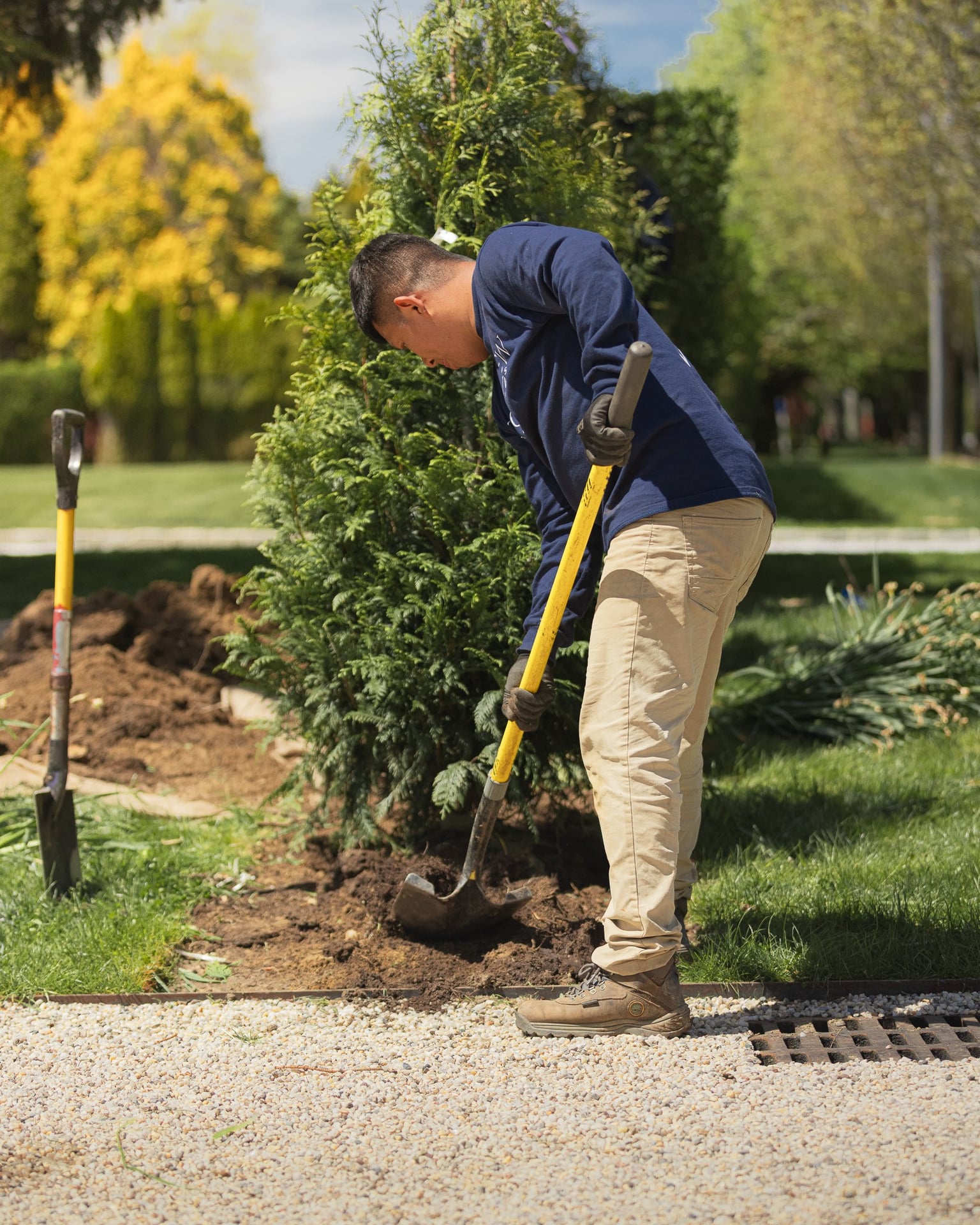
Organic matter can be useful, particularly around plants needing more consistent moisture. Compost improves the soil's ability to retain water and nutrients. The goal is not to turn naturally sandy soil into something completely different.
A two-to-three-inch layer of mulch can also help moderate soil temperatures and slow moisture loss. Keep mulch away from stems and crowns to avoid creating damp conditions directly against the plant.
Watering Sandy Soil Requires a Different Approach
Frequent, shallow watering encourages roots to remain close to the surface, where soil dries fastest.
New plantings generally benefit from slower, deeper irrigation that moistens the root zone. As drought-tolerant landscape establish, watering frequency can often be reduced.
Pay attention to wind as well as temperature. A sunny 80-degree day with steady coastal wind can pull moisture from plants surprisingly quickly.
Late August and early fall are also useful times to evaluate irrigation. Cooler temperatures may reduce evaporation, but newly installed plants still need consistent moisture as they develop roots before winter.
Don't Forget Salt Exposure
A plant can love sandy soil and still struggle near the coast.
Properties close to the ocean or bays may experience salt spray carried by wind. Roadside beds can also receive salt during winter. Plants in these positions need to tolerate the soil conditions and the exposure.
Cornell's woody plant resources specifically evaluate salt-spray and salty-soil tolerance, which is a useful reminder that "drought tolerant" and "coastal tolerant" are not interchangeable terms.
Protected beds behind structures or hedges may support a wider plant palette than an exposed ocean-facing section of the same property.
Work With Sandy Soil, Not Against It
Sandy soil is often treated as a gardening problem, yet many beautiful plants are naturally equipped for it. The secret is matching the plant to the conditions already present.
Bearberry can cover lean, exposed ground. Little bluestem and switchgrass provide movement and structure. Butterfly weed, wild bergamot, purple lovegrass, and blazing star bring seasonal color and support pollinators. Fragrant sumac can handle larger, drier areas where smaller perennials may be impractical.
For Hamptons gardens, the strongest planting plans also account for sun, wind, salt, irrigation, soil pH, and how conditions change from one part of a property to another.
Give sandy soil plants what they actually need rather than forcing them into richer, wetter conditions, and that fast-draining ground can become one of the garden's greatest strengths.
